
Skip to content
Arixent

Product Engineering

Product Discovery, UX & MVP

Validate the idea, design the experience and ship a first version customers can use.

Two colleagues planning with sticky notes on a glass wall

Overview

The most expensive software is the software nobody needed. Product discovery finds that out early, and an MVP proves the answer with real users rather than opinions. We run both with the urgency of a founder and the rigor of an engineering team.

Our discovery sprints produce a validated problem, a scoped first release and a working prototype. Our MVPs are real products: secure, deployable, instrumented and built on foundations you will not have to throw away when they succeed.

This page also covers the UX and UI design work that turns a validated idea into a product people can use.

Offering 1

Product discovery and MVP development

Product discovery finds out early whether an idea is worth building. An MVP proves the answer with real users rather than opinions.

Discovery sprints

User research, competitor and market review, problem framing and solution sketches in a time-boxed sprint.

Proof of concept

Technical feasibility on the hard part of the idea, whether that is an integration, an algorithm or an AI capability.

MVP scoping and roadmap

The smallest release that tests the hypothesis, plus the roadmap that follows.

MVP engineering

A production-quality first release built for learning, with analytics and feedback loops.

Typical use

  • Founders validating a product before or after fundraising
  • Enterprises testing a new digital product or business line
  • AI product ideas that require feasibility on real data
Offering 2

UX/UI design

Design decides whether people use what you build. Our designers work from research and data, not taste alone, alongside engineers from the first sketch.

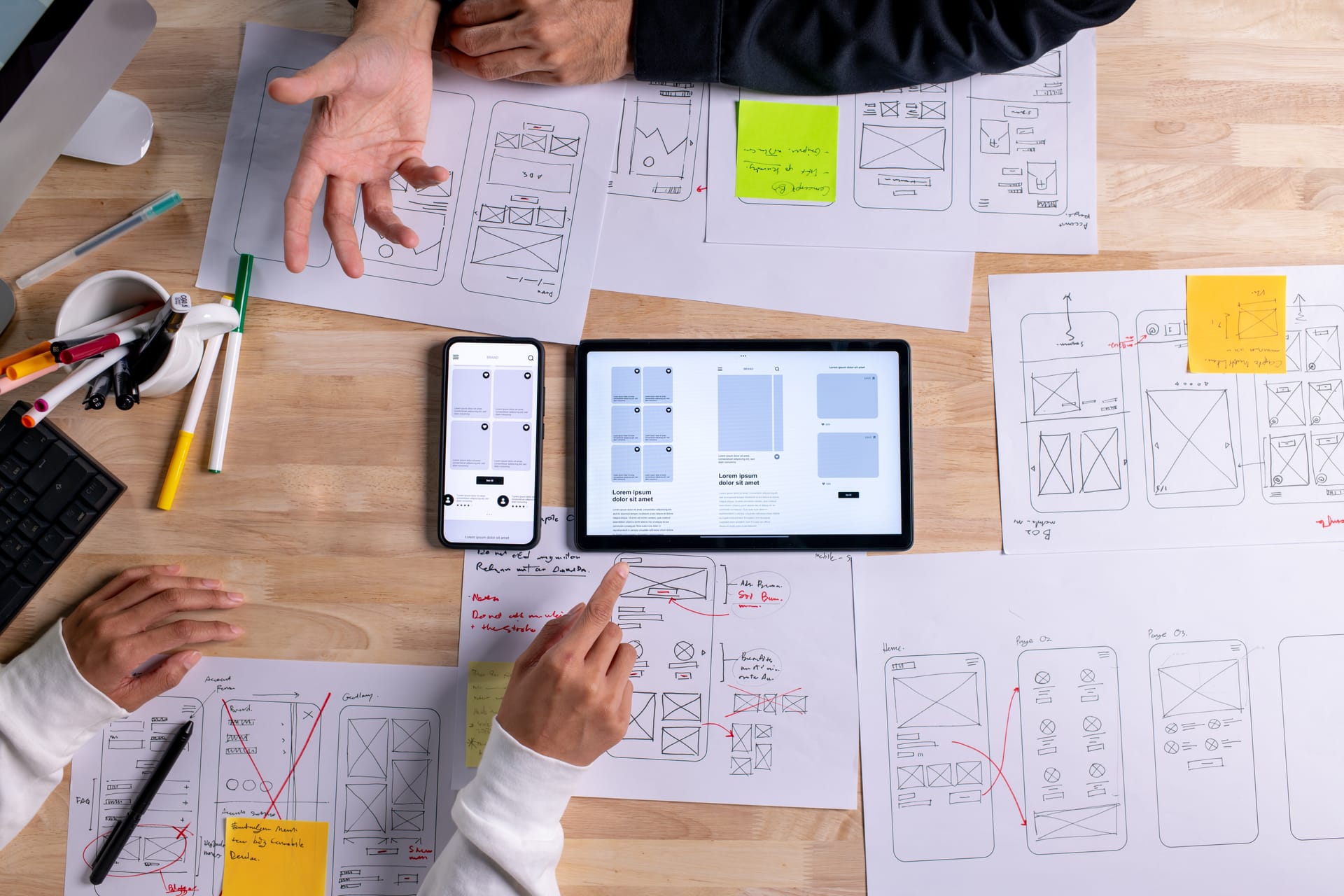
Designers reviewing app wireframes and a tablet prototype at a desk

User research

Interviews, usability testing, surveys and analytics review to ground decisions in evidence.

Information architecture and flows

Structure, navigation and journeys that make complex products feel simple.

Design systems

Reusable components, tokens and documentation aligned with the engineering stack.

Design for AI experiences

Patterns for confidence, citations, corrections, streaming responses and human oversight.

Typical use

  • New products that need a strong first impression and clear onboarding
  • Enterprise applications with complex workflows and power users
  • Design systems for companies with multiple products and teams

Want this for your product? Talk to an engineer who has built it.

How we work

How we deliver

  1. 01

    Discover

    Research, interviews, framing and prototypes in a short sprint.

  2. 02

    Define

    MVP scope, architecture, success metrics and plan.

  3. 03

    Build

    Sprints with weekly demos and user testing along the way.

  4. 04

    Learn

    Launch to real users, measure, and decide what to build next.

Stack

Tools we work with

We are neutral on tooling and pick what fits your environment, your team and the cost you can sustain.

  • Figma, FigJam
  • React, Next.js, React Native, Flutter
  • Node.js, Python, .NET
  • Postgres, Supabase, Firebase
  • AWS, Azure, GCP, Vercel
  • product analytics and feature flags
  • Storybook and design tokens
  • accessibility tooling aligned to WCAG 2.2

Bring the problem. We bring the team.

FAQ

Questions we hear often

Next step

Ready when you are.

Tell us what you are trying to build and we will come back with a point of view, not a pitch.