Skip to content
Arixent

AI Engineering

Machine Learning, Vision & MLOps

Forecasting, vision and edge models with the MLOps that keeps them reliable after launch.

Circuit board macro in blue tones

Overview

Not every problem needs a language model. Forecasting demand, scoring risk, recommending products, detecting anomalies and optimizing schedules are still won by well-built machine learning on well-prepared data. We build those systems end to end, from feature engineering to the pipeline that retrains them.

Our approach is unglamorous on purpose: understand the decision the model supports, establish a baseline, prove lift on held-out data, then invest in the engineering that keeps the model accurate as the world changes.

This page also covers computer vision, edge AI and MLOps, because in practice they ship together.

Offering 1

Machine learning development

Forecasting demand, scoring risk, recommending products and detecting anomalies are won by well-built machine learning on well-prepared data. We build those systems end to end, from feature engineering to retraining pipelines.

Predictive modeling

Demand, churn, propensity, risk and lifetime value models built with the business decision in mind.

Recommendation systems

Collaborative, content-based and hybrid recommenders for commerce, media and B2B catalogs.

Anomaly and fraud detection

Statistical and learned detectors for transactions, telemetry, quality data and security events.

Time-series forecasting

Hierarchical and probabilistic forecasts with the uncertainty ranges planners actually need.

Typical use

  • Demand forecasting for retail, distribution and manufacturing planning
  • Churn and retention models for subscription and telecom businesses
  • Credit, claims and fraud risk scoring
Offering 2

Computer vision development

Cameras and scanners generate more data than any other sensor in most operations. Computer vision turns images and video into decisions, built to work outside the lab with variable lighting, cheap cameras and scarce labels.

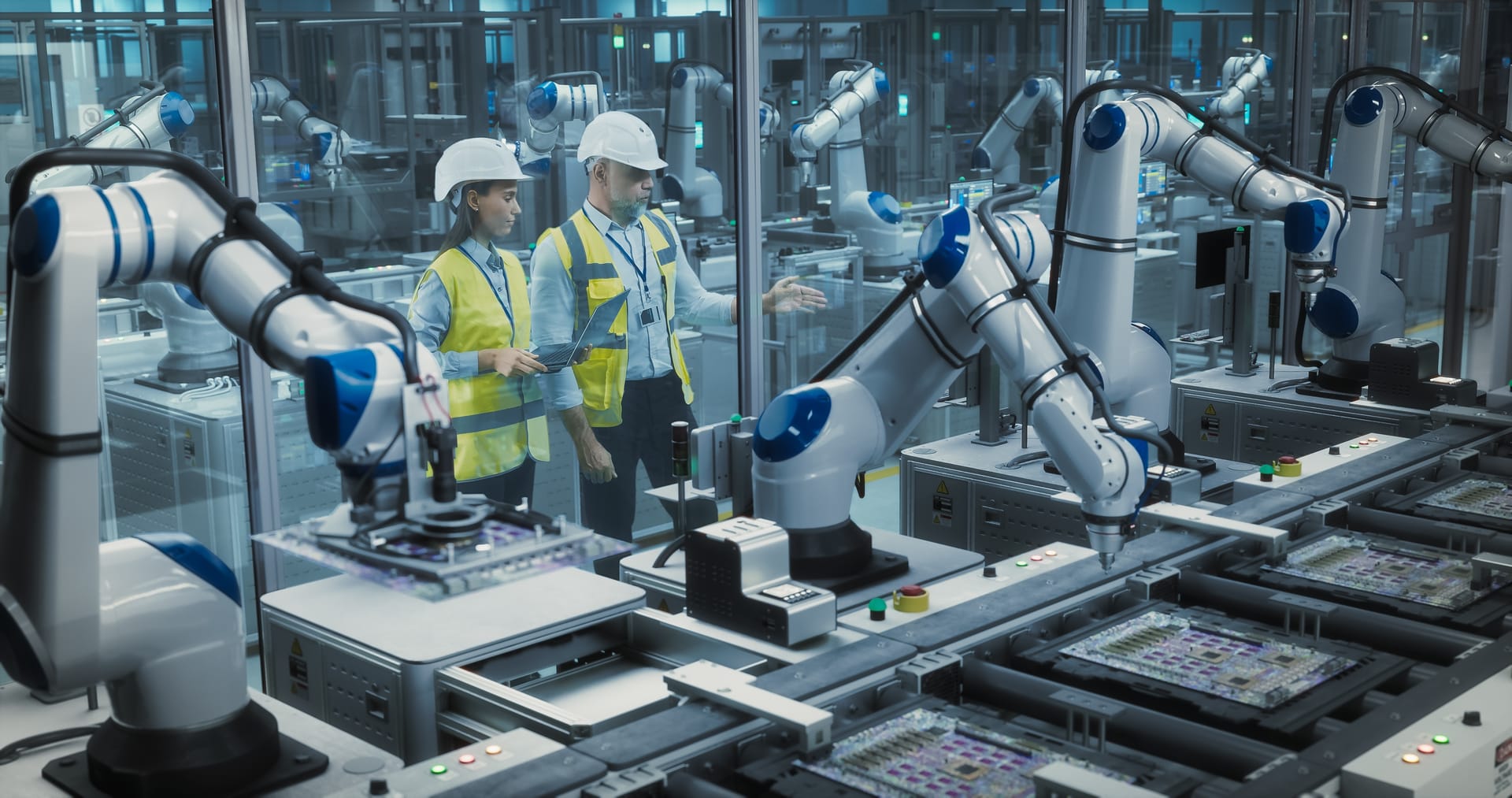
Engineers with a laptop beside robotic arms on a production line

Visual inspection and defect detection

Classification, detection and segmentation models for parts, wafers, packaging and assemblies.

Document understanding and OCR

Layout-aware extraction from scanned forms, invoices, IDs and handwritten notes, combined with LLMs for validation.

Video analytics

Object tracking, event detection, occupancy and safety monitoring from live or recorded video.

Data labeling strategy

Active learning, synthetic data and weak supervision to reduce labeling cost.

Typical use

  • Inline quality inspection on manufacturing and semiconductor lines
  • Automated reading of KYC documents, claims and shipping paperwork
  • Safety and compliance monitoring in warehouses and plants

Offering 3

Edge AI and IoT

Some decisions cannot wait for a round trip to the cloud. We build edge AI systems that run on cameras, gateways and industrial devices, and survive constrained hardware and intermittent connectivity.

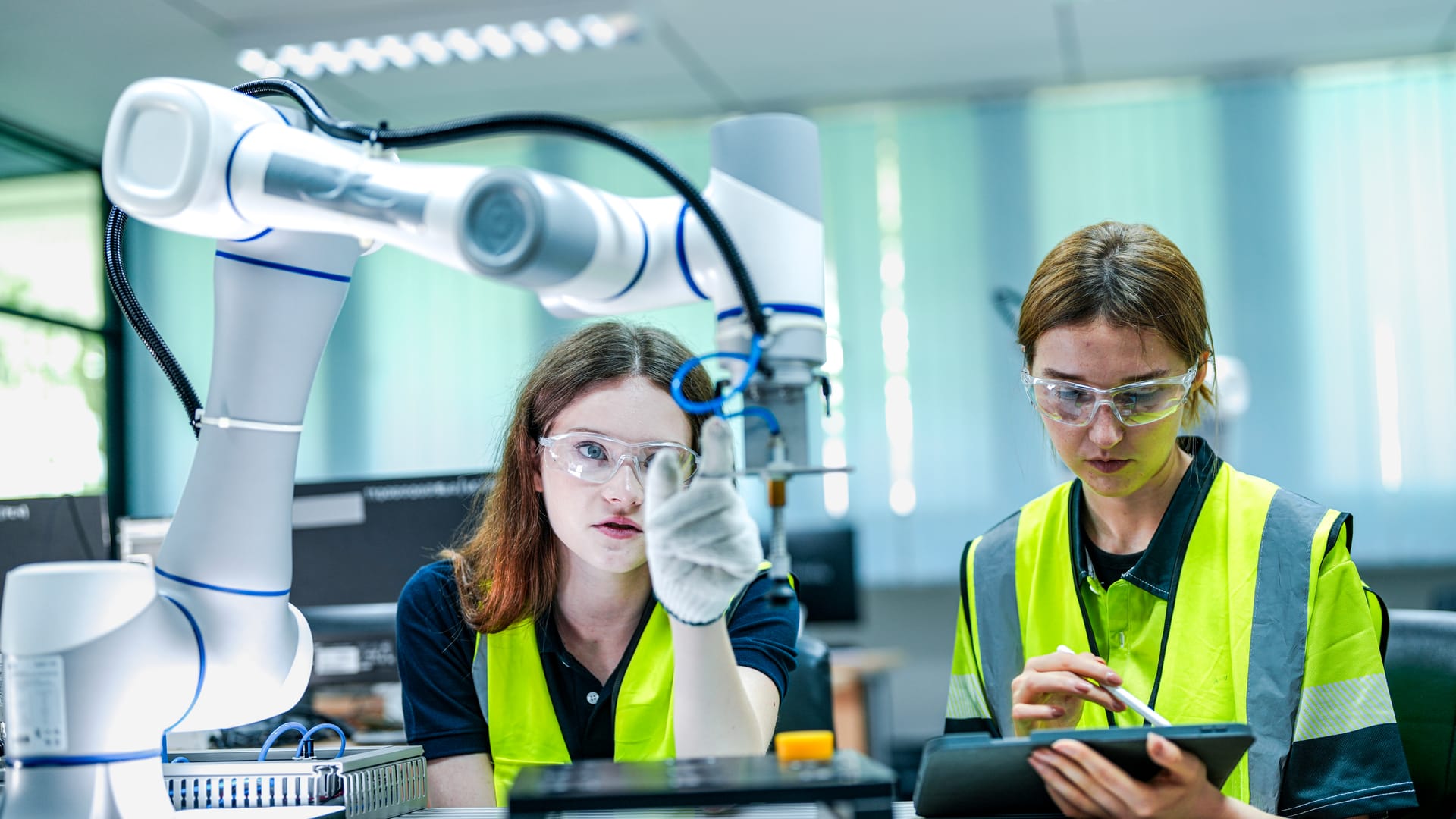
Engineers inspecting a collaborative robot arm in a lab

Edge model optimization

Quantization, pruning and distillation to fit models on constrained devices at the required latency.

Device and gateway software

Inference services, local buffering, secure communication and over-the-air updates.

IoT data pipelines

Telemetry ingestion, streaming processing and storage designed for scale and cost.

Fleet and model management

Versioned deployment of models and configuration across hundreds or thousands of devices.

Typical use

  • Inline visual inspection where cloud latency is unacceptable
  • Predictive maintenance on plant and field equipment
  • Worker safety and compliance monitoring

Offering 4

MLOps and LLMOps

The first version of a model is a project. Every version after that is operations. We set up the pipelines, evaluation and monitoring that make models and LLM applications routine to improve rather than heroic.

Multiple monitors showing system dashboards in a control room

ML pipelines and CI/CD

Automated training, validation, packaging and deployment with approvals and rollbacks.

Model registry and lineage

Versioned models, datasets and features with full traceability from prediction back to data.

LLM evaluation pipelines

Golden datasets, judge models, regression suites and prompt versioning run in CI for every change.

Monitoring and observability

Data drift, performance drift, latency, error rates, token usage and cost per feature with alerts.

Typical use

  • Teams with models in production that break silently or cost more each month
  • Regulated businesses that need auditability of models and prompts
  • Products with LLM features that must not regress when prompts or providers change

Want this for your product? Talk to an engineer who has built it.

How we work

How we deliver

  1. 01

    Frame

    The decision, the metric that matters and the baseline it must beat.

  2. 02

    Model

    Data preparation, feature engineering, experiments tracked and compared on held-out data.

  3. 03

    Ship

    Batch or real-time serving, integration into the product or workflow, monitoring in place.

  4. 04

    Maintain

    Retraining pipelines, drift detection and periodic review of business impact.

Stack

Tools we work with

We are neutral on tooling and pick what fits your environment, your team and the cost you can sustain.

  • Python
  • scikit-learn
  • PyTorch
  • TensorFlow
  • MLflow
  • SageMaker
  • Vertex AI
  • NVIDIA Jetson
  • ONNX Runtime
  • Kubernetes

Bring the problem. We bring the team.

FAQ

Questions we hear often

Next step

Ready when you are.

Tell us what you are trying to build and we will come back with a point of view, not a pitch.